September 18, 2026
By Bob Blumenthal
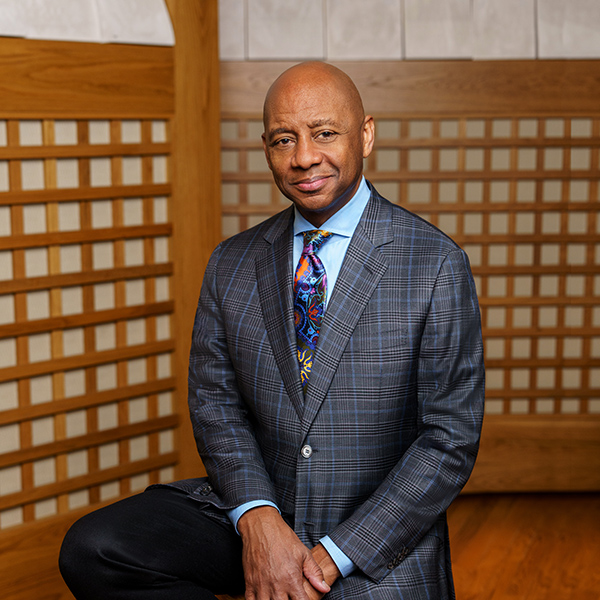
It was inevitable that saxophonist Branford Marsalis would be approached with the idea of paying tribute to John Coltrane in centennial celebration of Coltrane’s birth. “I thought it was a great idea” he says,” but I wanted to take a road less travelled.” He was drawn to John Coltrane and Johnny Hartman, the 1963 album that is considered among the ultimate examples of singer/ensemble synchronicity.
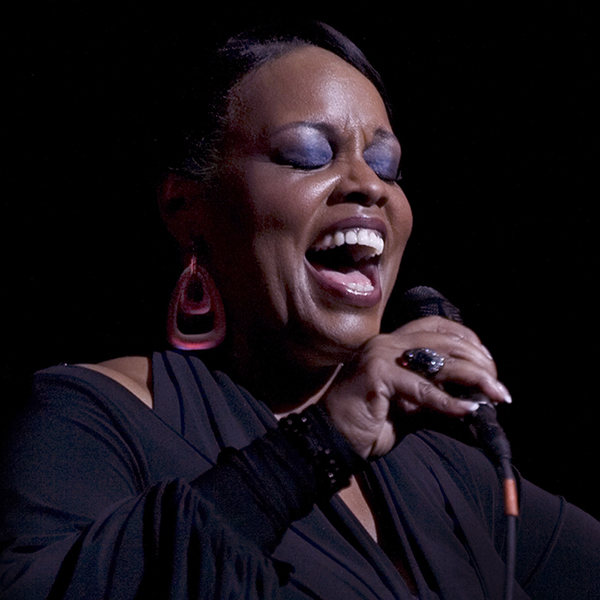
But who to take the vocal chair? “At first I thought about male singers, but I decided to sleep on it,” Marsalis recalls, “and when I woke up the first thing I said was ‘Dianne Reeves.’ There is a magic sound within sound that we call ‘the thing,’ and Dianne’s got the thing. She’s heard a lot of people, which attracts me, and she adds so much emotion to whatever she does.”
For Reeves, the connection was overdue. “We were supposed to play together in Clark Terry’s band,” the singer recalls, “but Branford did not join until I had decided to leave in the late ‘70s and settle in Los Angeles. I’ve loved all of his music, but we never managed to get together until he called and said, ‘I have this idea and I want you to be a part of it.’”
Both artists seized the opportunity to practice the art of the ballad, a skill that each learned with the help of earlier masters. “I was attracted to jazz first through its sound and the way musicians phrased, and I quickly realized that if I wanted to learn how to phrase I had to stop memorizing the Smolinsky’s Thesaurus of Scales and Melodic Patterns and start listening to Ella Fitzgerald and Billie Holiday as well as instrumentalists,” says Marsalis. “But it takes time to develop that melodic creativity. When I was young and too busy digging what was around, [Count Basie tenor saxophonist] Buddy Tate told me I was the worst ballad player he had ever heard. When I replied that I had been working on that very thing for two years and still sounded [bad], he said `You have to sound that way for a while until you don’t’, and he was right.”
Approaching ballads from a vocalist’s perspective, Reeves had the invaluable support of working as a teenager with Terry. “Standards and good melody, that’s what we did,” she recalls of her time with the trumpet giant. “He knew every lyric and every melody. That’s my foundation. And he preached giving the song whatever it needs. Sometimes it needs space, sometimes a little embellishment, sometimes nothing at all. You have to figure out how to make it your story.” Moreover, as Reeves’ parents loved Johnny Hartman, she knew the Coltrane/Hartman classic inside and out as a child.
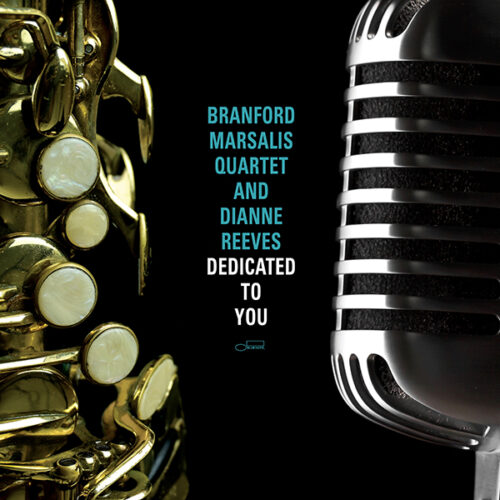
When Marsalis’ longstanding quartet with pianist Joey Calderazzo, bassist Eric Revis and drummer Justin Faulkner met Reeves for the recording of Dedicated To You, the musical fit was seamless. “This was more of an integrated band thing, where the arrangements happened in the studio,” Marsalis explains. “The original album used a consistent form – piano intro, double time after the vocal, arpeggios at the end. We didn’t want to put the tunes in a box. We played each one together, then decided what had to be added or taken away.”
Reeves embraced the challenge. “Listening to all the great singers coming up, I learned that they stood in the band, not in front of the band. They saw themselves as co-creators of the sound. The members of Branford’s quartet and I all speak the same language, and we all came up with ideas. On ‘Autumn Serenade,’ for instance, I just joined in when the guys were jamming, and that’s how we found the groove. It reminded me of that great album Sarah Vaughan made with Clifford Brown, where they were just jamming. And I loved the whole live aspect of the performance, in that beautiful hall.”
The site of the recording, at Clayton State University’s Spivey Hall in Morrow, Georgia, is another sign of producer Marsalis’ attention to detail. “Joey and I played duos in that venue in 2012, and we were shocked by the quality of the room’s sound. We needed a room like that, wide enough to capture our sound and Dianne’s sound.”
While few listeners remain surprised that Marsalis, Calderazzo, Revis and Faulkner can excel in any musical situation, the contribution of the pianist on this recording is truly extraordinary. Marsalis agrees that “he creates an emotional feeling that Dianne can exploit, and she does.” Reeves adds that “Just hearing Joey talk about ‘My One and Only Love’ showed me a subtext I had to bring to the song. But all four of them, the relationship they have and how they can talk about stuff other than music, to feel each other as people and not just musicians, being among them and hearing them each bring their own rhythmic and harmonic vocabulary, put me in a different space and inspired me.”
Reeves is heard on the six songs from the original album, including a duo with Calderazzo on “My One and Only Love” and a Marsalis/Calderazzo/Reeves trio on “Lush Life” that are album highlights. Instrumentals also drawn from the Coltrane canon provide contrast, including the Coltrane compositions “Central Park West” (in a haunting soprano saxophone/piano duo), “26-2” and “Big Nick.”
“John Coltrane was not about trying to destroy the norm,” Marsalis insists. “He came up like Picasso. He knew the tradition and then saw how to expand it. He didn’t think of songs as ‘vehicles,’ he was sympathetic to the songs he played, and that’s our goal, to be sympathetic to the music. Which is what we will continue to do when we begin touring with Dianne in the fall.” Reeves is equally excited about the prospects. “I can’t wait to see where we take the music. I told Branford we may even need to dance.”