07 Mar 2019

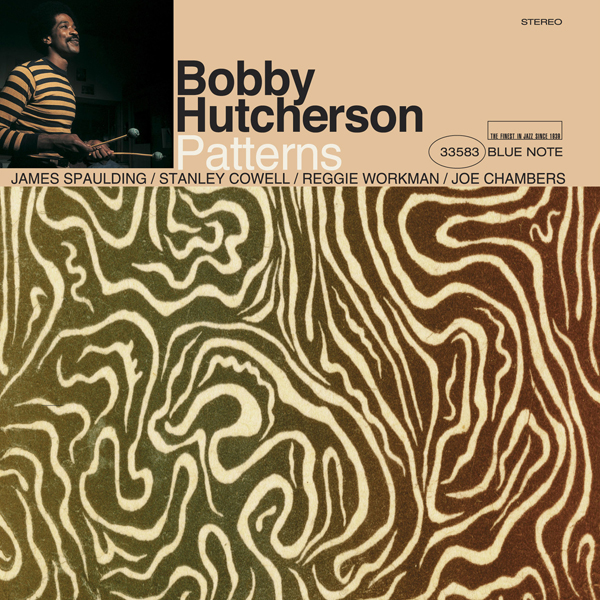
An entirely worthy Bobby Hutcherson LP that went unissued until 1980, Patterns finds the vibist working in typically challenging territory; what makes this session distinctive is that it features some of drummer and favorite Hutcherson composer Joe Chambers’ most structured work, though that hardly means it’s traditional or unadventurous….

Read More

07 Mar 2019

Perhaps the single album that best sums up Bobby Hutcherson’s early musical personality, Components is appropriately split into two very distinct halves. The first features four Hutcherson originals in a melodic but still advanced hard bop style, while the latter half has four free-leaning avant-garde pieces by drummer Joe…

Read More

07 Mar 2019

Bobby Hutcherson’s late-’60s partnership with tenor saxophonist Harold Land had always produced soulful results, but not until San Francisco did that translate into a literal flirtation with funk and rock. After watching several advanced post-bop sessions gather dust in the vaults, Hutcherson decided to experiment with his sound a…

Read More

07 Mar 2019

Producer Alfred Lion was very impressed when he attended John Hammond’s Spirituals to Swing concert of Dec. 23, 1938, which had introduced boogie woogie pianists Albert Ammons and Meade Lux Lewis to New York audiences. Two weeks later, he started the Blue Note label by recording nine Ammons solos,…

Read More

07 Mar 2019

Bluesnik, Jackie McLean’s seventh session as a leader for Blue Note Records, was one of only two recordings issued by McLean in 1961. With a lineup of trumpeter Freddie Hubbard, bassist Doug Watkins, pianist Kenny Drew, and drummer Pete La Roca, McLean laid down a hard blowing session of…

Read More

07 Mar 2019

In 1963, alto saxophonist Jackie McLean was well aware of John Coltrane and Ornette Coleman. He assembled a band with vibist Bobby Hutcherson, who had already played with Eric Dolphy, drummer Tony Williams, bassist Eddie Khan, and trombonist/composer Grachan Moncur III. While still adhering to the hard bop principle,…

Read More

07 Mar 2019

Jackie McLean had always been a highly emotional soloist, so it makes sense that he was one of the first hard bop veterans to find a new voice in the burning intensity of jazz’s emerging avant-garde. McLean had previously experimented with Coltrane’s angular modes and scales and Ornette’s concept…

Read More

07 Mar 2019

This 1967 session is notable for the presence of Ornette Coleman in the role of sideman, on trumpet no less. There are only three tunes on New and Old Gospel, one side-long piece by McLean, a four-part suite entitled “Lifeline,” and two works by Coleman, including the title track…

Read More

07 Mar 2019

Demon’s Dance was Jackie McLean’s final album for Blue Note, closing out an amazing streak of creativity that’s among the more underappreciated in jazz history. The record retreats a bit from McLean’s nearly free playing on New and Old Gospel and ‘Bout Soul, instead concentrating on angular, modal avant…

Read More

07 Mar 2019

Recorded in 1964, Jackie McLean’s It’s Time was only available on CD in the United States as part of a four-disc Mosaic set of his complete Blue Note recordings between 1964-1966. The band here includes trumpeter Charles Tolliver, pianist Herbie Hancock, bassist Cecil McBee, and drummer Roy Haynes. The…

Read More