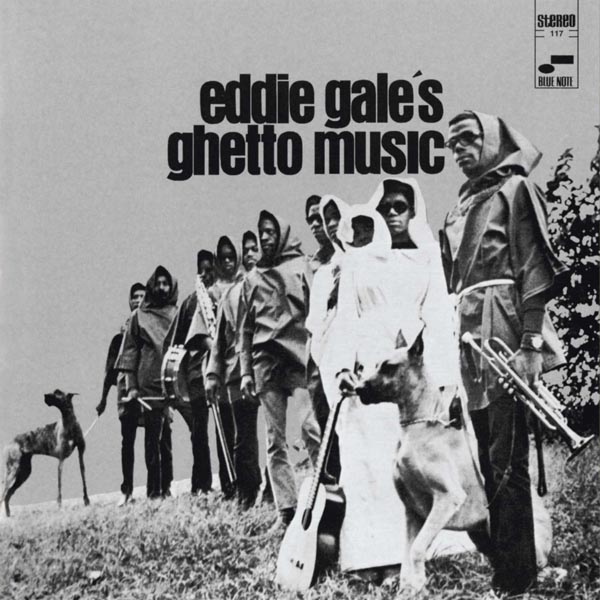
The aesthetic and cultural merits of Eddie Gale’s Ghetto Music cannot be overstated. That it is one of the most obscure recordings in Blue Note’s catalogue — paid for out of label co-founder Francis Wolff’s own pocket — should tell us something. This is an apocryphal album, one that…
Love it or hate it, trumpeter Eddie Gale’s second Blue Note outing as a leader is one of the most adventurous recordings to come out of the 1960s. Black Rhythm Happening picks up where Ghetto Music left off, in that it takes the soul and free jazz elements of…
Farlow is joined by second guitarist Don Arnone, bassist Clyde Lombardi, and drummer Joe Morello for three standards (“Lover,” “Flamingo” and “All Through the Night”) plus a trio of the leader’s originals during what was Farlow‘s first recording as a leader. Even at that early stage, Tal Farlow was a giant.
Among the rarest Blue Note recordings are the ones issued in the early ’50s on 10″ LPs, a format that did not catch on (being quickly overshadowed by 12″ LPs). Among the two albums that fell into the cracks were sessions by Howard McGhee (another CD has his initial Blue Note…
This 1998 CD has all of the music from two formerly scarce 10″ LPs. Trumpeter Howard McGhee heads an all-star group that includes trombonist J.J. Johnson, tenor saxophonist Brew Moore, pianist Kenny Drew, bassist Curly Russell, and drummer Max Roach on “I’ll Remember April,” an original by the leader and four songs (plus an alternate take) by Drew,…
By 1947, Blue Note had switched its focus to bop; the label’s final trad recordings were of George Lewis’ band. There was always something very charming about the clarinetist’s spirited music, and he became one of the most popular New Orleans jazzmen of the 1950s. Lewis’ last of three…
A set of gritty electric funk and soulful blues, Down Home Style is an excellent showcase for Brother Jack McDuff’s gripping, funky style. Inspired more by the tight grooves of Stax Records than bebop, Down Home Style features McDuff leading a small group through a number of R&B grooves,…
Moon Rappin’ is one of Brother Jack McDuff’s most ambitious efforts, a loose concept album that finds the organist exploring funky and spacy soundscapes. Unlike most McDuff records, there isn’t a steady groove that flows throughout the record — the album flies into atmospheric territory that isn’t strictly soul-jazz,…
On the first new release from the Mosaic subsidiary of Blue Note, veteran trumpeter Tolliver finally makes the long awaited big-band recording of the group that has played occasionally in New York City, revived from the remnants of his legendary ’70s Music Inc. Orchestra. A bit of the old repertoire (“Mournin’ Variations”…
Most Blue Note soul-jazz albums from the late ’60s went one of three ways: it either was a straight-ahead commercial session, a slightly psychedelic outing, or a funky workout with a vague “Black Power” theme.Dr. Lonnie Smith had followed the latter path with Think!, the predecessor to Turning Point, and there are…