November 14, 2025
By John Murph
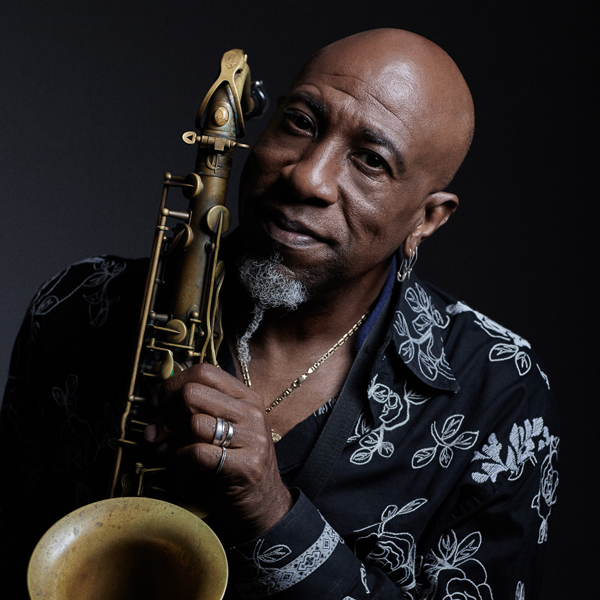
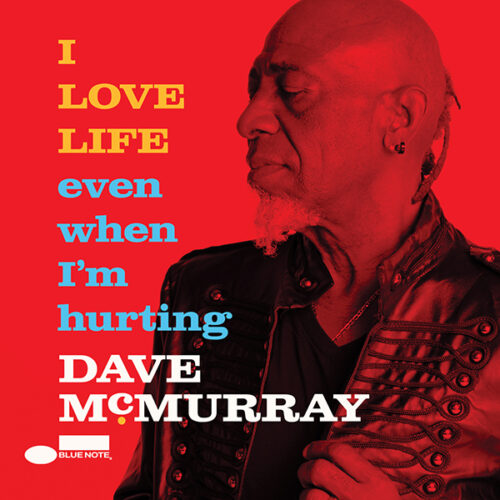
I LOVE LIFE even when I’m hurting, the title of the new album from saxophonist and composer Dave McMurray, is an affirmation of his indomitable spirit. It’s also a celebration of the love that he has for his hometown of Detroit, and for the many musicians with which he’s collaborated.
McMurray conceived of the title after having a deep discussion about the death of a friend who had been worn down by illness, eventually giving up and dying alone. McMurray’s response to that painful revelation was one of resilience: “Man, I love life even when I’m hurting.”
Afterward McMurray wrote down that statement because it meant so much to him. “That ended up being the album title, because I kind of wrote songs around that,” he explained, “songs about positivity.”
McMurray wrote six of the nine compositions, all of which burst with soulful melodicism, emotional immediacy, and irresistible grooves. After the brief opener, “This Life,” which showcases McMurray’s brawny and iridescent tenor saxophone tone and heartfelt melodic invention, the album kicks in high gear with ebullient “The Jungaleers,” which shuffles to an Afrobeat groove concocted by drummer Jeff Canady and percussionist Mahindi Masai. The additional propulsion is provided by none other than bassist and producer Don Was, a longtime collaborator of McMurray and Blue Note Records president.
Was and McMurray’s professional and personal relationships are more than four decades deep. Their working relationship began when McMurray played on Was (Not Was)’s 1981 eponymous debut album. Both grew up in Detroit’s fertile music scene where jazz, blues, funk, soul, rock, punk, and electronic music often collides and coalesces.
“We’ve been great friends through all kind of situations,” McMurray said of Was. “I’ve always appreciated him. We hit it off immediately. He’s a great producer. We have a great working relationship because he lets me do my thing. But he has that insight, where he can look over my projects and give me that little bit of advice that I’ll need. That’s why I love working with him.”
McMurray recorded the album at Rustbelt Studios in Royal Oak, Michigan. In addition to Was, Canady, and Masai, I LOVE LIFE features other Detroit-based musicians such as guitarist Wayne Gerard, bassist Ibrahim Jones, vocalist Herschel Boone, and keyboardists Luis Resto and Maurice O’Neal.
“The Jungaleers” song title refers to the mascot of Detroit’s Southeastern High School, where McMurray attended, even though he says that he had images of “four big African dudes marching” in his head when he wrote the tune.
Was’ acoustic bass playing also appears on the suspenseful, hard-knuckled titled track, “I LOVE LIFE;” the glowing ballad “Just A Thought,” dedicated to McMurray’s wife and daughter; the hopeful soul-jazz gem “Find Your Peace (4 Tani),” dedicated to drummer extraordinaire Tani Tabbal, who’s worked with such jazz pioneers as Sun Ra, Cassandra Wilson, and Anthony Braxton; and the rousing cover of the Grateful Dead’s “The Wheel.”
McMurray begins “The Wheel” with an intro animated by scorching tenor saxophone eruptions reminiscent of the late Pharaoh Sanders before settling into a recognizable folk-rock groove. The track draws a connection to McMurray’s two prior Grateful Deadication tribute albums which found him exploring the iconic band’s songbook.
“I love the melody of that song, but I trying to come up with an arrangement that sounded like me,” McMurray explained. “At first, my arrangement of ‘The Wheel’ was totally instrumental. But we ended up recording three or four takes of it, each one of them ended up differently. But the best part for me is when we get to the solo section. It just took on this other magic.”
The other two non-originals on the album are “We Got By” and “The Plum Blossom.” The former is a popular Al Jarreau soul-jazz ballad, brimming with themes of resilience through tough times. McMurray’s version features neo-soul star Kem singing lead vocals. The latter is an early-’60s spiritual jazz tune written by Yusef Lateef that showcases McMurray’s mastery on flute.
McMurray says that his rendering of “We Got By” is 30 years in the making. He and Kem, who’s also spent considerable artistic developmental time in Detroit, have a long history. McMurray says that when he first heard Kem sing he didn’t sound as similar to Jarreau as he does now. But eventually Kem’s supple vocals began shaping like Jarreau’s alchemic blend of jazz and R&B.
“I was heavily influenced by Al Jarreau too,” McMurray revealed. “I listened to his first album [1975’s We Got By] all the time. From watching Kem progress as a singer, I’ve always had him in mind to sing on my version.”
McMurray’s version of “The Plum Blossom” represents another Detroit connection. Lateef also developed his artistry in the Motor City, working with the likes of Milt Jackson, Elvin Jones, and Kenny Burrell. McMurray recalls seeing Lateef perform at Detroit’s famous Baker’s Keyboard Lounge.
“[Lateef] was always my guy to listen to because he played sax, flute and oboe,” McMurray said. “And he wasn’t in anybody else’s mode in terms of what people thought a jazz guy would do. ‘The Plum Blossom’ is just such a hypnotizing song. For the longest time, I would always listen to it but never play it myself, up until now.”
Other strong Detroit vibes course through McMurray’s original, “7 Wishes 4 G,” which percolates to a hazy soul-jazz deep house groove worthy of Moodymann or Norma Jean Bell. “I love dance music,” McMurray said. “But I wanted to do the song in an 7/4 odd meter but still feel like house music while also sounding a bit like Pharaoh Sander’s ‘Astral Traveling.’”
“Making this album was such a cool project,” McMurray concludes, “because everyone on it is somebody that I love.”