June 5, 2026
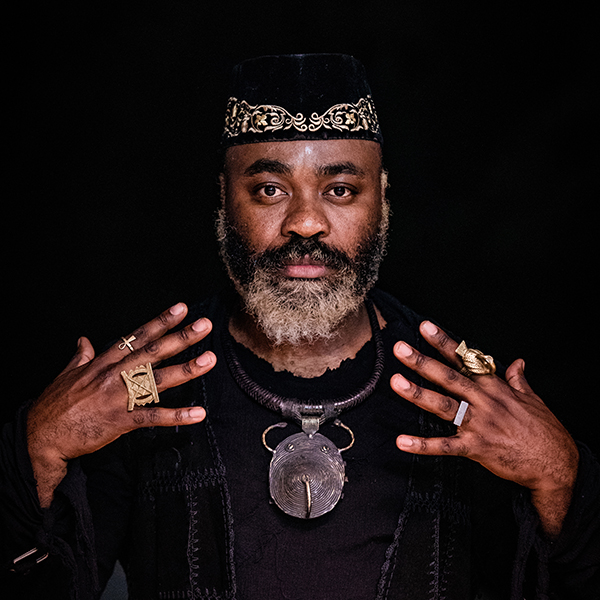
Nduduzo Makhathini has shared “Unembeza,” the fourth and final single to be revealed from the pianist’s forthcoming Blue Note album The Myth We Choose out June 26. The delightful hymn-like piano trio piece is imbued with a gospel-kissed glow that is uniquely South African. Watch Makhathini recording “Unembeza” live in the studio with bassist Dalisu Ndlazi and drummer Lukmil Perez.
Co-produced by Makhathini and his 18-year-old son, Thingo Makhathini, The Myth We Choose features special guests including Shabaka Hutchings, DJ and producer Black Coffee, trumpeter Robin Fassie, guitarist Keenan Ahrends, and the vocalists Thando Zide, Muneyi and Omagugu, Makhathini’s spouse and longtime collaborator. The album finds Makhathini expanding his soundworld, thanks in large part to Thingo. A producer, songwriter and musician, Thingo has developed a deep and wide-ranging understanding of music old and strikingly new, which proves transformative throughout The Myth We Choose. “Every time you hear a connection to electronics, or different kinds of grooves that people don’t as often associate with me, those are his ideas,” says Makhathini.
Songs are vital to a culture’s myth-making, Makhathini argues, which makes them essential to how future generations perceive history. “I have always felt that songs speak to us, songs look at us,” he writes in the album’s liner notes. “In years to come, it will be the histories of the day that will choose or not choose our songs. If our songs are not chosen, then our voices would never be heard… On the contrary, if our songs are chosen, then indeed, what we are dealing with now is designing future myths. With our actions today, we are making suggestions for what tomorrow may be.”
That’s a profound ambition for an LP, but coming from Makhathini, it’s hardly surprising. To the 43-year-old South African — an educator and healer as well as a venerated musician — a performance is a ritual that demands real engagement from its audience and does an incredible amount of conceptual heavy lifting. Music invokes personal, familial and cultural stories, Makhathini says. Music is prophecy. Music can restore physical vitality.
Ultimately, The Myth We Choose is about the awareness to create a legacy of love and healing in the present tense. “Wayne Shorter said something really beautiful that I liked some years ago,” Makhathini reflects. “His idea was to play and write music the way you want the world to be, the world that you hope for. That’s always my purpose.”