September 29, 2026
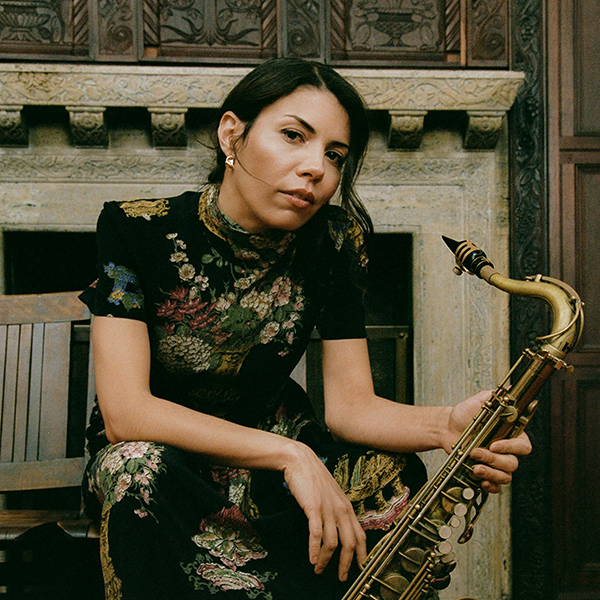
Chilean saxophonist Melissa Aldana and her quartet featuring Cuban pianist Gonzalo Rubalcaba perform a stunning NPR Tiny Desk Concert as part of NPR Music’s annual Hispanic Heritage Month series, “El Tiny.” Along with bassist Pablo Menares and drummer Kush Abadey, the quartet plays music from Aldana’s most recent Blue Note release, Filin, a gorgeous ballads album featuring songs drawn from Cuba’s Filin music tradition. The 4-song Tiny Desk set includes “Dime Si Eres Tú” by Cesar Portillo de la Luz, “Imágenes” by Frank Domínguez, “Little Church” by Hermeto Pascoal, and Aldana’s original composition “Unconscious Whispers” from her 2024 album Echoes Of The Inner Prophet.
For as long as she’s been a recording artist, Aldana had wanted to make a ballads record. With archetypes like John Coltrane’s classic 1963 LP Ballads as her North Star, Aldana saw a slow-tempo project as a way to advance her lifelong quest for sound.
“I transcribe Sonny Rollins, Wayne Shorter, John Coltrane, Joe Henderson, Lester Young, Charlie Parker, and Don Byas, among many others. For them the sound itself is a tool to express an emotion,” she explains. “Every single note is a whole world. So there is a technical side to playing, but then there is this mystical side of sound that… I still don’t know exactly what it is.” A ballads record, she believed, would help her burrow deeper into the essence of her sound.
To start, she reached out to Rubalcaba, a revered pianist and one of her “biggest heroes” who she has longed to work with at project-length. His suggestion proved a revelation: Aldana should interpret the Filin music of his native Cuba, a gorgeous yet still-unheralded tradition of richly arranged romantic song that thrived between the late 1940s and early 1960s. Filin — the word derives from “feeling” — “created a dialogue between traditional Cuban trova, the bolero and jazz, redefining Cuban musical identity,” Rubalcaba explains. “Filin elevated lyrics to a level of greater poetic and colloquial intimacy, and gave rise to instrumentalists and singers of great virtuosity and creative elegance.”
To Aldana, Filin songs presented a deeply meaningful new ideal: They reminded her of the lovelorn standards she’d internalized as a jazz saxophonist, but with lyrics sung in her native tongue. “They felt like the ballads that I love from the Great American Songbook,” she says, “but because the lyrics are in Spanish, I was able to connect to these songs in a way that I never thought I could.”